

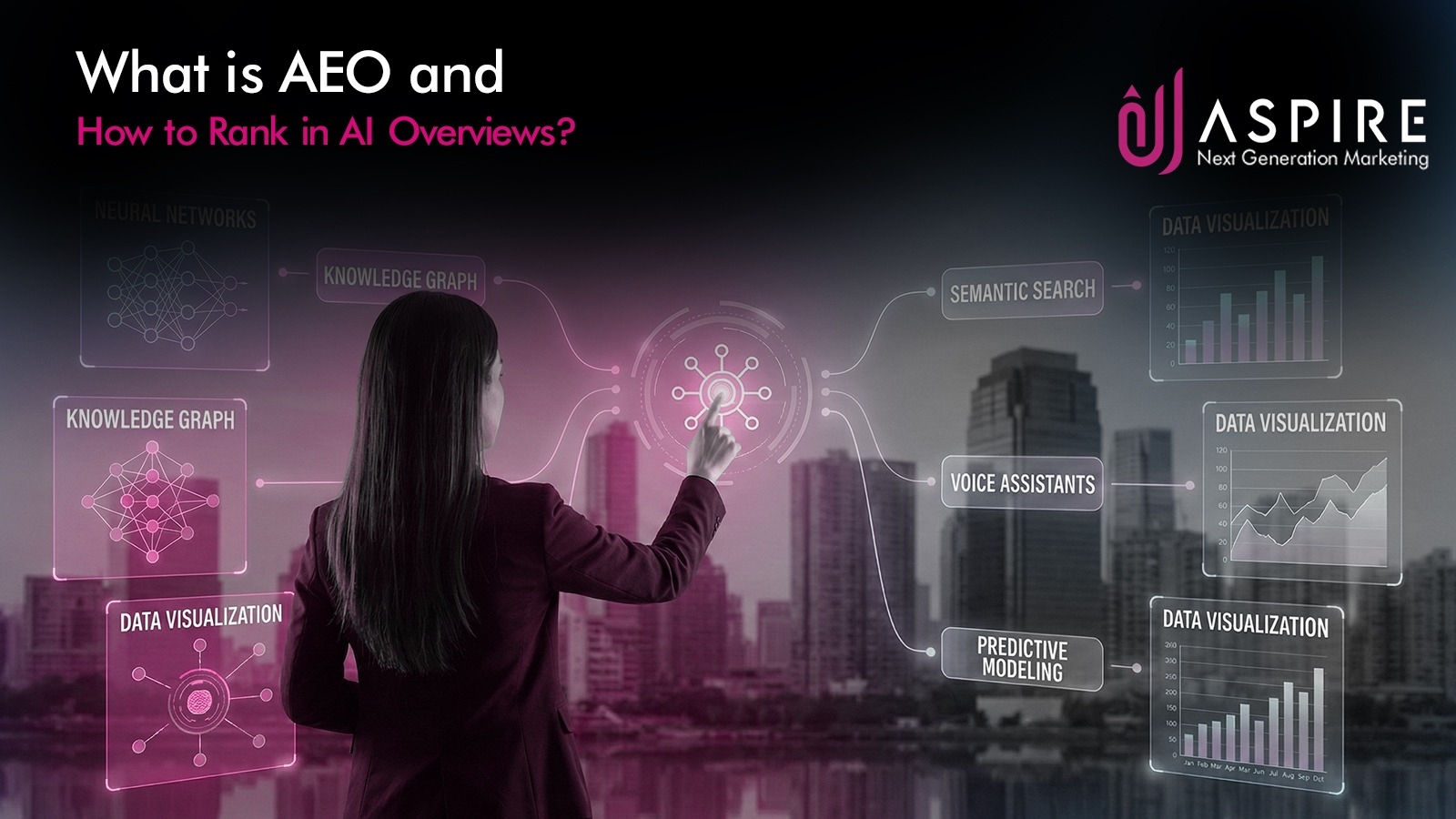
Search behaviour is changing faster than ever. Users no longer search only to click links. They search to get direct, clear answers. Platforms like Google’s AI Overviews, voice assistants, and smart search panels now deliver responses without forcing users to open multiple pages.
This shift has given rise to a new discipline known as Answer Engine Optimisation (AEO). Brands that understand AEO early are gaining visibility where traditional SEO struggles to keep up.
This guide breaks down what AEO really means, how it connects to modern AI SEO services, and practical steps on how to rank in AI overviews without gimmicks or shortcuts.
Table of Contents
What Is Answer Engine Optimization (AEO)?
Answer Engine Optimization focuses on helping search engines understand, trust, and surface your content as a direct answer to a user’s question.
Traditional SEO works around rankings, backlinks, and traffic. AEO works around clarity, authority, and usefulness. The goal is not only to appear on page one but to become the chosen response inside AI-driven search experiences.
Answer engines scan content to find:
- Clear answers to specific questions
- Credible sources and expertise
- Structured information that is easy to interpret
AEO aligns content with how AI systems think, summarize, and respond.
Why AEO Matters More Than Ever?
AI Overviews and conversational search experiences now sit above organic results. Users often read the AI-generated response and move on.
This behaviour creates two realities:
- Fewer clicks for generic content
- More visibility for brands trusted as answer sources
Websites that rely only on keyword stuffing or surface-level blogs lose relevance. Websites that demonstrate expertise, experience, and clarity gain priority.
AEO ensures your content remains visible even when users never scroll down.
AEO vs Traditional SEO
SEO still matters, but its role has evolved.
Traditional SEO focuses on:
- Keywords and rankings
- Backlinks
- Technical performance
AEO focuses on:
- Question-based intent
- Structured explanations
- Topical authority
- Trust and credibility
Modern AI SEO services combine both approaches. Ignoring AEO today creates a visibility gap tomorrow.
How AI Overviews Choose Content
AI Overviews pull data from multiple trusted sources. Content selection depends on relevance, clarity, and trust signals. Key evaluation factors include:
- How directly a question is answered
- How reliable the source appears
- How well the topic is covered overall
Pages written only for traffic rarely qualify. Pages written to educate and guide stand a better chance of being effective.

The Role of EEAT in SEO and AEO
EEAT in SEO plays a central role in answer-based search engine optimization (SEO).
EEAT stands for:
- Experience
- Expertise
- Authoritativeness
- Trustworthiness
Search engines assess whether content reflects real knowledge and real-world understanding.
Strong EEAT signals include:
- Author bios that show subject expertise
- Original insights, examples, or data
- Accurate and updated information
- Transparent business details
AEO heavily depends on EEAT because AI systems avoid risky or unverified sources.
How to Rank in AI Overviews Step by Step
1. Start With Real Questions
Content should mirror how people actually ask questions.
Examples include:
- What is Answer Engine Optimization
- How does AEO differ from SEO
- How to rank in AI overviews
Each page should answer a small group of related questions clearly.
2. Answer Early and Clearly
Readers and AI systems both prefer quick clarity.
A strong opening includes:
- A direct definition or explanation
- Simple language without fluff
- Context that sets expectations
Long introductions dilute relevance and reduce answer eligibility.
3. Use Simple Structure and Formatting
AI systems interpret structured content more effectively.
Best practices include:
- Clear H2 and H3 headings
- Short paragraphs
- Bullet points for lists
- One idea per section
Complex layouts and vague headings reduce clarity.
4. Build Topical Authority
Single articles rarely win AI Overviews alone.
Topical authority grows through:
- Multiple articles around a core topic
- Internal linking between related pages
- Consistent depth and quality
An AI SEO agency often maps topic clusters to strengthen authority across a domain.
5. Strengthen EEAT Signals
EEAT cannot be faked. It must be demonstrated.
Ways to improve EEAT:
- Publish author credentials
- Add real examples and insights
- Cite reliable sources where relevant
- Keep content updated
Search engines reward consistency and credibility over time.
6. Optimise for Conversational Search
AI Overviews mirror conversational language.
Content should include:
- Natural phrasing
- Question-and-answer sections
- Simple explanations
Over-optimised or robotic language creates friction.
7. Maintain Technical SEO Basics
AEO works best when technical foundations remain strong.
Essential factors include:
- Fast page loading
- Mobile-friendly design
- Clean HTML structure
- Indexable content
AI SEO services often audit technical gaps before scaling AEO strategies.
Common AEO Mistakes to Avoid
Many websites struggle with AEO due to avoidable errors.
Common mistakes include:
- Writing vague content without direct answers
- Overusing keywords unnaturally
- Publishing thin or repetitive blogs
- Ignoring author credibility
- Chasing trends without depth
Answer engines reward usefulness, not volume.

How AI SEO Services Support AEO
Professional AI SEO services focus on aligning content strategy with answer-driven discovery.
These services often include:
- Search intent analysis
- Question-based content planning
- EEAT optimisation
- Structured content frameworks
- Performance tracking across AI surfaces
An experienced AI SEO agency understands how search behaviour evolves and adapts content accordingly.
AEO Is Not a Replacement for SEO
AEO enhances SEO rather than replacing it.
SEO brings traffic.
AEO brings visibility.
Together, they build sustainable growth.
Brands that treat AEO as a long-term strategy gain an edge as search platforms continue shifting toward answers over links.
How Aspire Digital Media Approaches AEO?
Aspire Digital Media works at the intersection of search behaviour, content clarity, and long-term visibility. The team focuses on building content that answers real user questions while meeting the evolving expectations of answer engines.
Every strategy prioritises relevance, structure, and credibility rather than short-term ranking tactics. By integrating EEAT in SEO, intent-led content planning, and technical precision, Aspire Digital Media helps brands position themselves as trusted sources across AI Overviews and modern search experiences. The approach stays grounded in usefulness, ensuring content remains discoverable even as search continues to shift toward direct answers.
Conclusion
Answer Engine Optimization reflects how people actually search today. Users want clarity, speed, and trust. Search engines want accuracy and authority.
Websites that focus on genuine expertise, structured answers, and user intent earn visibility across AI Overviews and beyond.
Success depends less on tricks and more on substance. Clear answers, real knowledge, and consistent quality remain the strongest ranking signals in modern search.
Answer Engine Optimization is the practice of creating content that directly answers user questions in a clear and structured way. Search engines use this type of content to generate responses for AI Overviews, voice search, and featured answers.
Traditional SEO focuses on rankings and website traffic. AEO focuses on becoming the most reliable answer to a question. Search engines prioritise clarity, credibility, and relevance when selecting content for AI-driven responses.
Ranking in AI Overviews requires clear answers, strong EEAT signals, and well-structured content. Pages that explain topics thoroughly and demonstrate real expertise are more likely to be selected as trusted source
EEAT in SEO helps search engines judge whether content is reliable and written by knowledgeable sources. Answer engines prefer content that shows experience, expertise, authority, and trustworthiness to avoid misinformation.
AI SEO services help businesses adapt their content for modern search behaviour. These services focus on intent-based content, structured answers, and authority building to improve visibility across AI Overviews and conversational search.
An AI SEO agency provides strategic guidance, content frameworks, and technical optimisation tailored for answer-driven search results. Businesses competing in high-intent categories often benefit from specialised expertise.
AEO may reduce low-intent clicks but increase high-quality visibility. Users who engage after seeing an AI Overview often arrive with stronger intent and higher trust in the brand.
Add a Comment